The Real Price of Japanese Retro Games: Nintendo Products
If you follow me or any other content creator in Japan that posts their pick-ups and trips to Japanese thrift stores, then you already know that the price of Japanese retro games are a fraction of the cost of their counterparts in the USA. Just how different are the prices though? And are all the stores in Japan the same price wise? While the stores in the USA selling retro games also vary in terms of pricing, in my opinion those prices tend to stay close to the average price of the product within 10-20% of the market.
Japan is not like that. One store could be selling a product close to the American price, but others could be selling it for 10% of that. The price difference is so profound that I thought it would be a good idea to write an article about these prices differences. While doing research for this article I set out to answer a few questions that people might ask when they go shopping for retro games in Japan.
- What is the actual price difference between English and Japanese games?
- Why is the Japanese version priced at that level?
- How easy is it to pick this game up in Japan and where can you get it? (on a scale from 1-10, with 10 being the most difficult to find)
- What is the price difference between the various game stores in Japan? (For this article I decided to use Super Potato as the high end store chain, Surugaya as the mid-priced store chain, and Book Off/Hard Off as the lower end stores).
To show how the prices are different, I decided to use a wide variety of games from a number of systems. I didn’t choose only the most expensive games for each console, but rather what I thought was popular and easy to find in Japan. Also I didn’t choose games from each and every system out there. I felt it was better to go with ones that are well-known (sorry PC Engine and Wonderswan). The prices for the English games are taken from Price Charting using the complete in box average price, while the prices for Japanese games is using their non-damaged/slightly damaged prices that I collected at the major chains that sell retro games (stores tend to take a percentage off if the box or manual is damaged, or the disc is scratched). I will also be posting the price of Japanese games using the current exchange rate as of writing this article, which is about 158 yen to $1 US. The Japanese prices of games is what they were as of the end of December, 2025.
Super Nintendo/Super Famicom
- Earthbound (Mother 2) = US price: $2000 Vs. 10100 yen($64, Super Potato), 7700 yen ($49) Hard Off/Book Off)
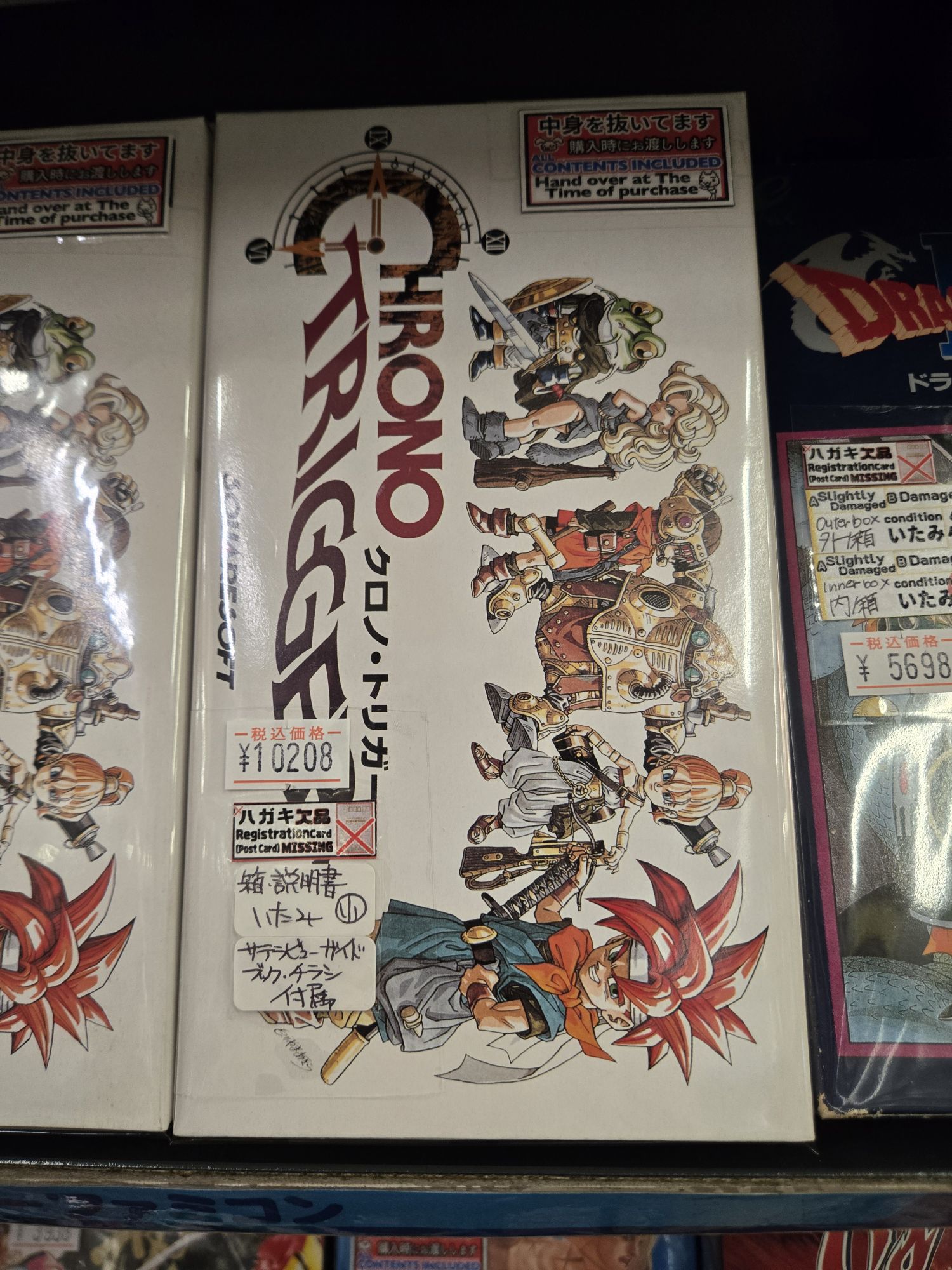
- Chrono Trigger = US price: $850 Vs. 10200 yen ($64, Super Potato), 3300 yen ($21, HO/BO)
- Super Metroid = US price: $340 Vs. 20000 yen ($127, Super Potato), 20000 ($127, Surugaya), 11000 yen ($70, HO/BO)
First off, let me just say that the prices for these games in the USA are insane. I’m sure that you can probably find them for less than these prices online somewhere, but those prices will still be much higher than their Japanese counterpart. There is a whopping $1944 price difference between the JP version of Earthbound and the US version. It actually cheaper to fly to Japan, buy a Japanese copy along with a Japanese Super Famicom, and to play it that way than to buy the English version. Chrono Trigger also has a pretty hefty price tag on it, but what surprises me the most is that the Japanese prices for Super Metroid are catching up to the English version.
To be honest Super Metroid was one of the earliest Super Famicom games I noticed was disappearing from shelves and going up in price a few years back. You don’t really need to know Japanese to play it and a few years back it was a bargain compared to now. So why are these games priced at this level? One reason I think is that preowned games in general tend to well taken care of by their owners, and lots of people tend to keep their boxes. There is also the whole “collection” mentality has been going on in Japan for decades (think Gunpla and figures). I wouldn’t be surprised if the only way to trade in games to stores in the past was if you had the boxes and manuals with them which is why you find so many games complete in box in Japan. It’s much more lenient now of course, but you still can find in box items rather easily.
As for how easy it is to find these games complete in box in Japan, it is getting harder now than it was a few years ago. These are highly sought after games by collectors and tourists, so they don’t show up all the time. On a scale of 1-10, I would say these games are around a 6 in terms of difficulty to find. These types of games will be sold out in high tourist traffic areas, but somewhat easier to track down outside of town. I’m sure as prices go up it might become a little easier to find, and you can be certain that there is still room for the games to go up in price. However, I don’t think they’ll never reach the heights they have in the English.
Gameboy
- Pokemon Red = US Price $365 Vs. 38300 yen ($242, Super Potato), 13000 yen ($82, Surugaya), 11000 ($70, BO/HO)
- Kirby’s Dreamland 2 = US Price $159 Vs. 6600 yen ($42, Super Potato), 3400 yen ($21.50, Surugaya), 3300 ($21, BO/HO)
- Zelda: Oracle of Seasons = US Price $187 Vs. 8300 ($53, Surugaya), 5500 ($35, BO/HO)
Prices for Pokemon games in English seem to always be high and stay that way these days. The Japanese versions have been following suit over the last year or so, and that is mostly because of tourists coming over to buy them up. Even at there newer, higher prices, you can still get Pokemon games for much cheaper than you can get the English versions. A year or two back they would have been 10% of these prices, but as long as tourists come to Japan to buy them, the prices should remain high. Games in the Kirby series have also started to increase in price due to the character’s popularity, but are still a great deal in Japan. The Zelda games have been very popular over the last year or two in Japan too, with all of the Gameboy offerings doubling or tripling in price. It boggles the mind how expensive games like Link’s Awakening are in Japanese now. If I said that these increase in prices were solely due to tourists coming over and picking those types of games up, would you believe me? It’s very likely true, as there aren’t a lot of collectors of old handheld games in Japan (at least not enough to push the needle on the price as much as it’s gone up).
Thankfully, due to the increase in demand of these types of games, many game stores have been aggressively buy-listing these titles or going through their warehouses to make sure they have inventory so that customers can find them easily. Pokemon games are the easiest to find, at about a 1 out of 10 difficulty, whereas Kirby 2 and the Zelda Oracle games sit closer to about a 4 or 5. If they don’t have them at one store, there’s a good chance you’ll find those at another.
Gameboy Advance
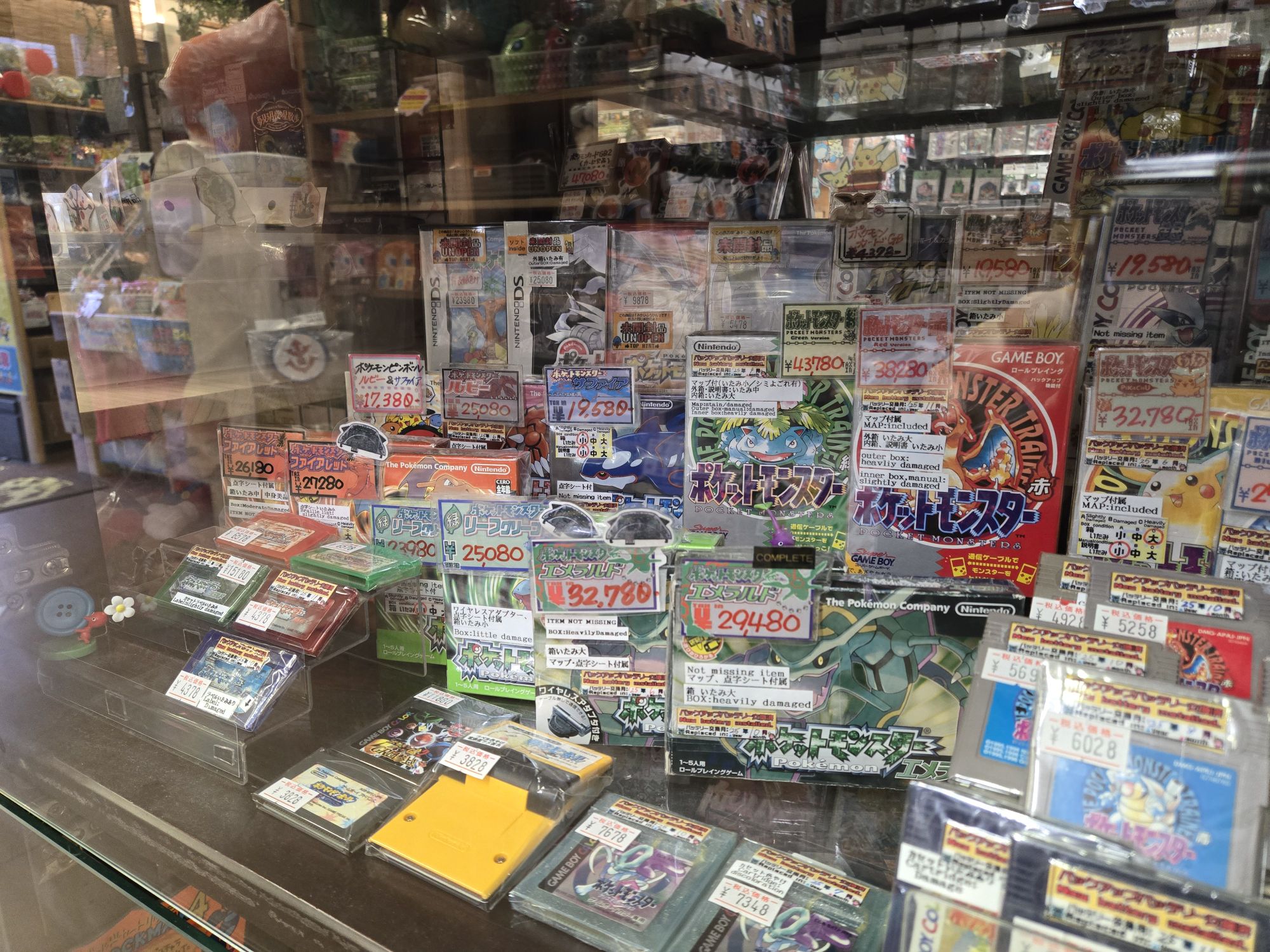
- Pokemon Emerald = US price $590 Vs. 30000 yen ($190, Super Potato), 26000 yen ($164, Surugaya), 17600 yen ($111, BO/HO)
- Golden Sun = US Price $90 Vs. 6600 yen ($42, Super Potato), 5000 yen ($32, Surugaya), 3800 yen ($24, HO/BO)
- Final Fantasy VI Advanced = US Price $144 Vs. 7100 yen ($45, Super Potato), 3300 yen ($21, Surugaya), 4400 yen ($28, HO/BO)
The Gameboy Advance Pokemon games were another recipient of the retro game “Tourist Tax”, with copies of Emerald shooting up over the last year and a half, and Ruby and Sapphire following not too far behind. Less than two years ago they could be had for under 5000 yen complete, but are now getting closer to their English counterparts due to people getting priced out of the USA copies and going with the Japanese version instead. Gameboy Advance games with popular characters have been going up in price across the board, but RPGs especially are rising quickly. All the Final Fantasy games are going up, as well as Golden Sun, but are still more affordable then the English versions are. I would like to point out that in Japan, some of the Japanese Metroid and Castlevania games on the Gameboy Advance have actually overtaken the the English versions. So if you’re looking to get a deal on those types of games, you’re out of luck (FYI Metroid 2 on Gameboy is also incredibly expensive with a box in Japan now, usually fetching 20 to 30k yen).
While the number of Gameboy and Super Famicom game collectors in Japan might be smaller and it might be considered a more niche hobby, the number of young professionals in Japan that grew up with the Gameboy Advance and Nintendo DS is rather large and I tend to see people in their late 20s and 30s reminiscing over these games at thrift stores when I go shopping. While the prices are still somewhat affordable, the demand from them and tourists will push GBA prices up in the near future. However, due to the large number of children who played Gameboy Advance growing up, these games are all pretty easy to find. Pokemon Emerald is probably a 2 our of 10 in difficulty, and both Final Fantasy VI and Golden Sun are about a 4 in terms of how hard it is to find them. They are still fairly common.
Nintendo 64
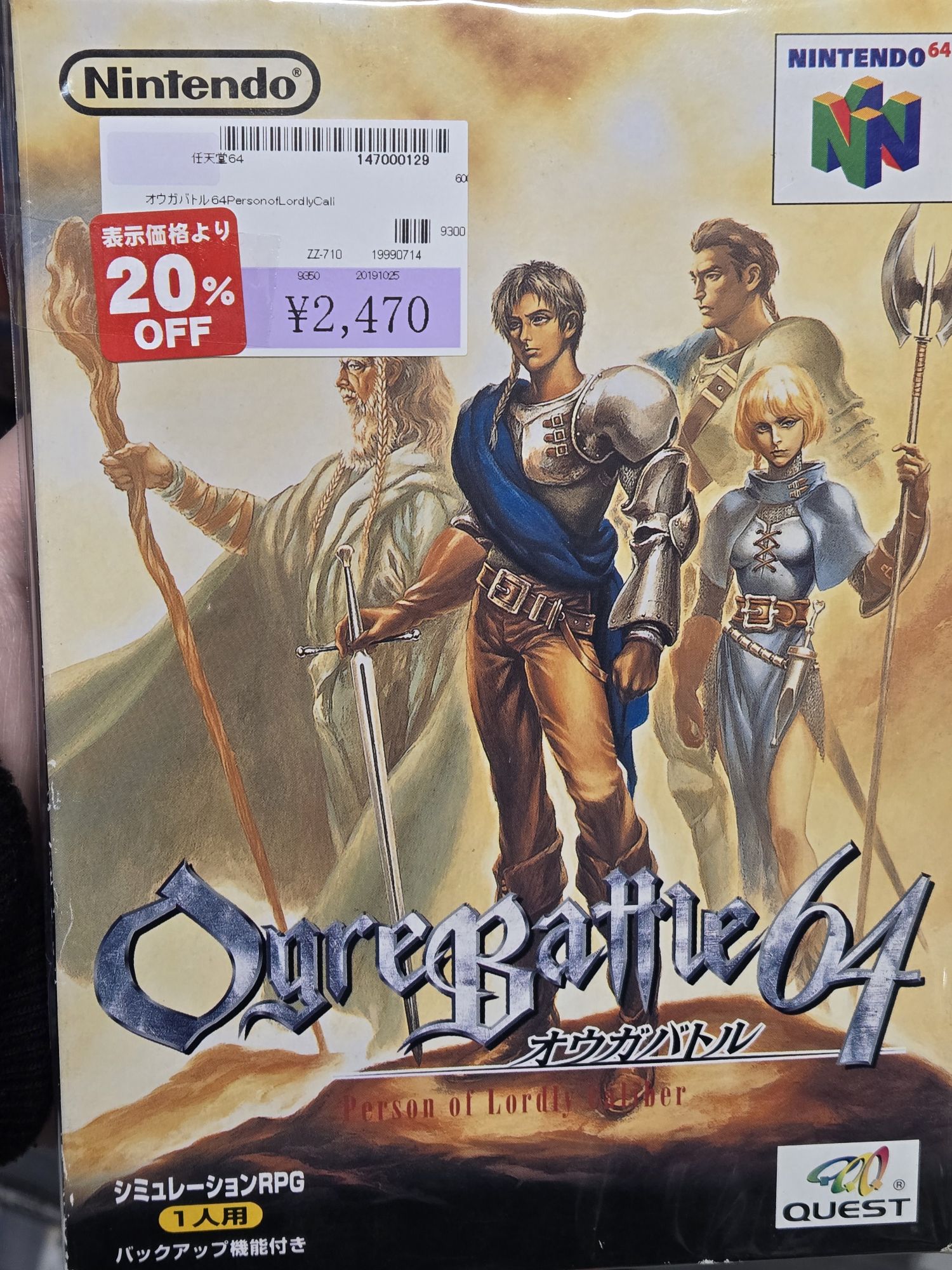
- Ogre Battle 64 = US Price $315 Vs. 2470 yen ($16, Surugaya), 1200 yen ($7.50, HO/BO)
- Zelda: Ocarina of Time = US Price $125 Vs. 4600 yen ($29, Surugaya), 3300 yen ($21, HO/BO)
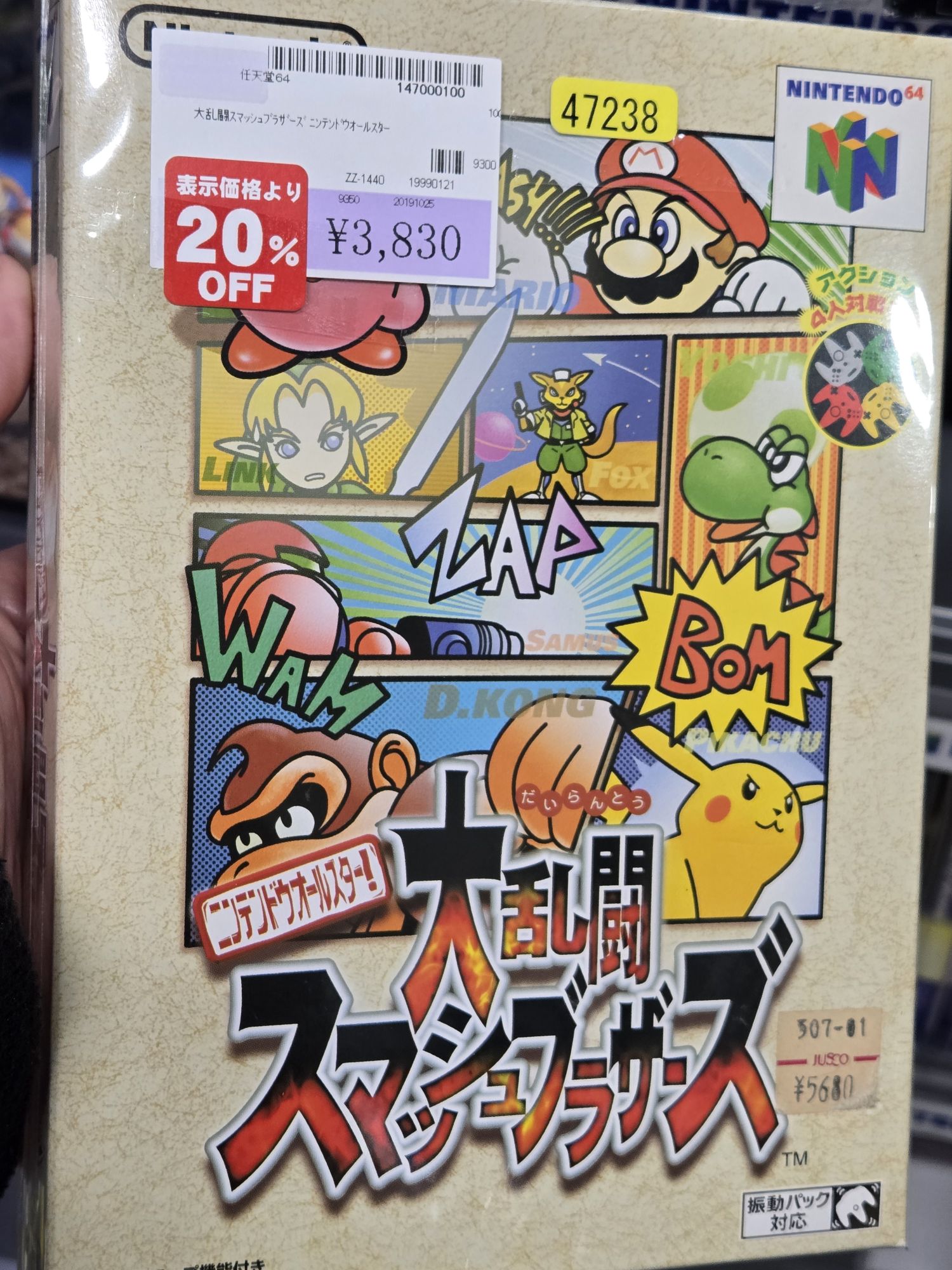
- Super Smash Bros. = US Price $180 Vs. 6600 yen ($42, Super Potato), 3830 yen ($24, Surugaya), 1650 yen ($10.50, HO/BO)
I am not in the market to buy N64 games, but I do know that they have been a popular target for collectors in the USA. I have had some friends visiting Japan look for N64 games, so I’m not a total stranger to their pricing. The Nintendo 64 doesn’t seem to be as popular in Japan as overseas though, so getting copies of games is comparatively cheap. Loose versions of games are plentiful, as it is with Super Famicom and Famicom games as well. Even at places like Super Potato, many of the popular titles are half the price of those in the USA, and at places like Hard off or Book Off you can find some great bargains on N64 games (though not all stores have great inventories of boxed N64 games).
As I stated above, finding loose copies of these games are pretty easy, but boxed ones are a little rarer. Both Ogre Battle and Ocarina of Time were sold out at Super Potato when I went there, but to be honest Ocarina is pretty easy to find boxed. I would say the difficulty is 4 out of 10. Smash Bros. might be closer to 5, and a boxed Ogre Battle is probably around a 6 or 7. It is a bit harder to find them boxed at Hard Offs or Book Offs due to inventories varying wildly between stores. For these prices though, it’s probably worth tracking down boxed copies since they’re so much cheaper than the English versions.
Gamecube
- Cubivore (Dobutso Bancho) = US Price $525 Vs. 3100 yen ($20, Surugaya), 2750 yen ($17.50, HO/BO)
- Chibi Robo = US Price $199 Vs. 4600 yen ($29, Super Potato), 3100 yen ($20, Surugaya), 2200 yen ($14, HO/BO)
- Mario Kart Double Dash = US Price $70 VS. 2900 yen ($18, Surugaya), 2000 yen ($12.50, HO/BO)
One of the more ridiculous price differences I wanted to point out between USA and Japan is Cubivore, aka Dobutso Bancho. The game is ridiculously rare overseas, but is almost a common staple of thrift stores in Japan. I have seen them as low as 1500 yen ($10) and have considered buying a copy as a curiosity, but it doesn’t seem like the type of game I’d enjoy. Chibo Robo is another pricey game in English due to its uniqueness and rarity in the USA, but in Japan it’s a good deal no matter where you get it from (I picked up a copy for 2200 yen myself the other year and sold my English copy for about $130. No regrets. It’s pretty easy to play in Japanese).
Gamecube games are kind of seeing a renaissance in the USA due to nostalgia and a solid library of first party games, but I feel like the console doesn’t have that same effect on collectors/retro gamers here. The stock of Gamecube games seems to be getting smaller and smaller at non specialist stores like Book Off and Hard Off, but strangely enough, the prices aren’t really going up. Most of the first party games in box have been going up in price over the last year, but it is very rare to see Gamecube games reach over the 2000-2500 yen price point. One of the main reasons I decided to become a Japanese Gamecube Collector back in 2022 was due to how cheap copies of their games were. About 80% of my collection was bought for under 1500 yen ($10). While the inventory of Gamecube games are shrinking, it’s still pretty easy to find these titles. Cubivore/Dobutsu Bancho is about a 3 on the difficulty scale, Chibi Robo is a 4, and Mario Kart Double Dash is a 2.
Nintendo DS
- Pokemon Heart Gold w/ Pokewalker = US Price $400 Vs. 22000 yen ($139, Super Potato), 18000 yen ($114, Surugaya), 11000 yen ($70, HO/BO)
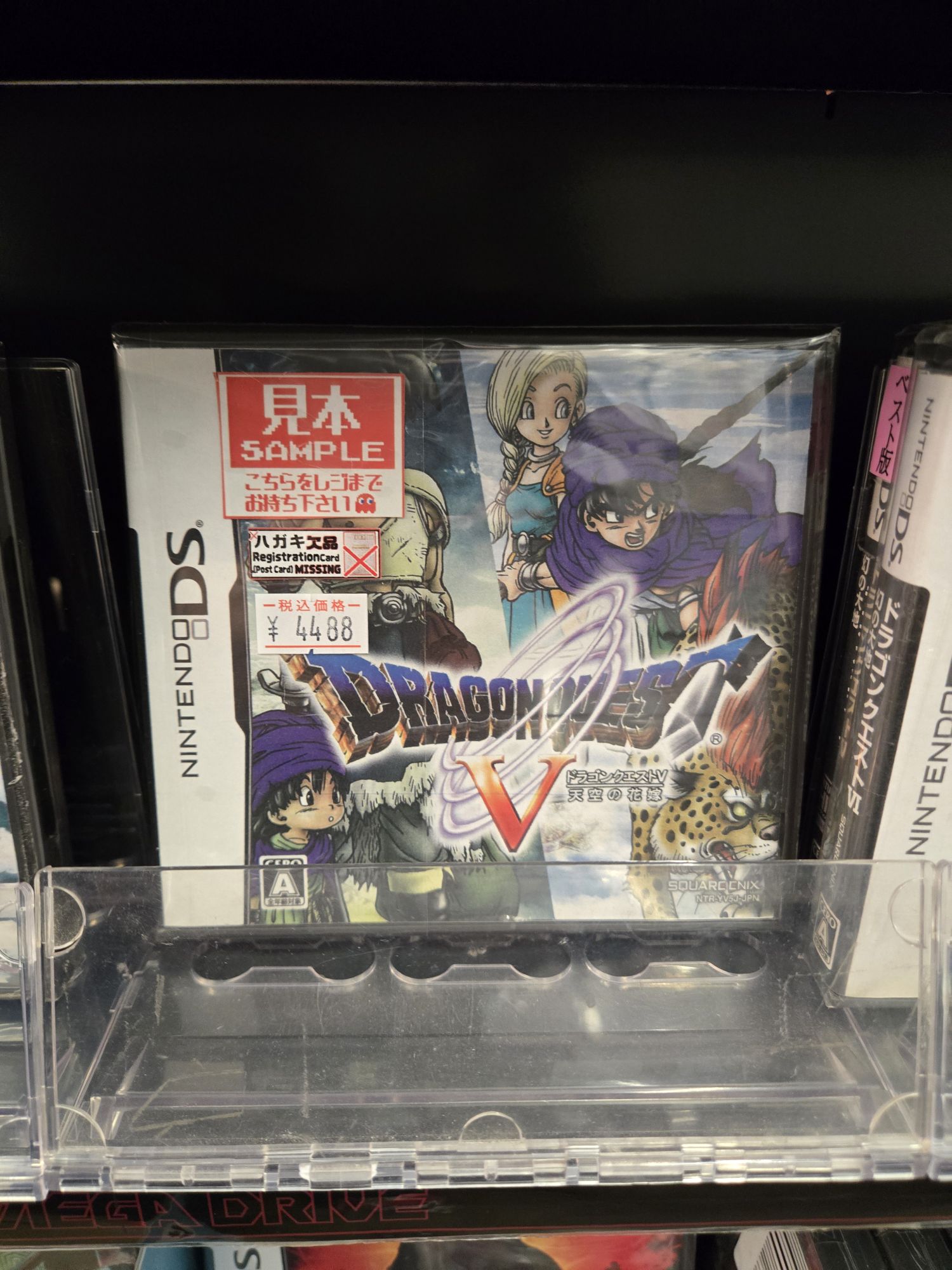
- Dragon Quest V = US Price $155 Vs. 4500 yen ($28.50, Super Potato), 3600 yen ($23, Surugaya), 3300 yen ($21, HO/BO)
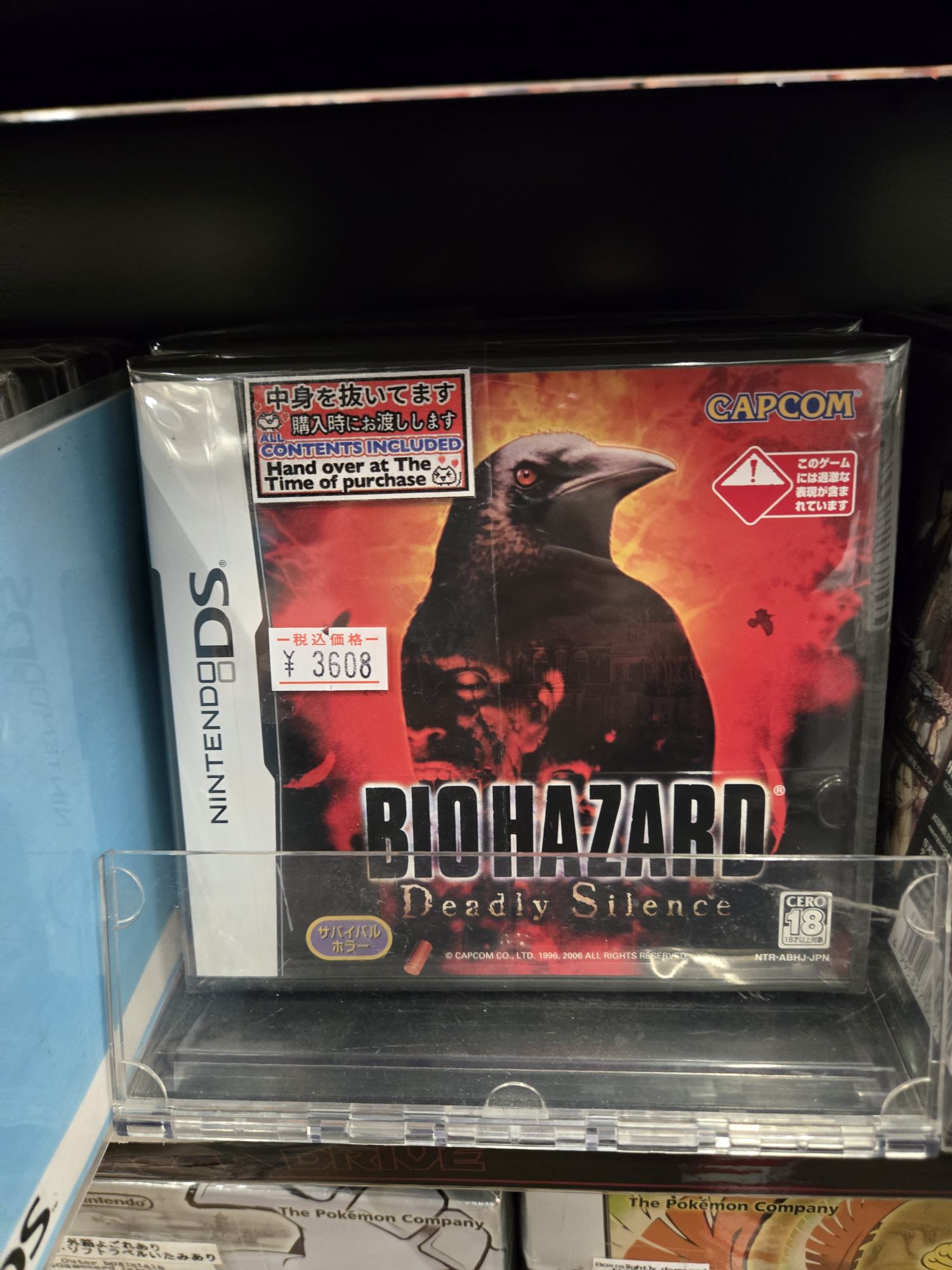
- Resident Evil Deadly Silence = US Price $89 Vs. 3600 yen ($23, Super Potato), 2600 yen ($16.50, Surugaya), 2200 yen ($14, HO/BO)
The last Nintendo hardware that I can truly count as retro is the Nintendo DS. Sure the Wii and 3DS are pretty old now, but from a collectors point of view the games are still relatively low value. People aren’t jumping over each other to get good deals on games like Wii Sports or Link’s Crossbow training. The DS though? That’s an entirely different story. Any system with a main entry Pokemon title is going to be popular, and the Nintendo DS had multiple. The price of the English version of Heart Gold and Soul Silver has been fluctuating for a while, but it’s only going to go up. It wasn’t until a year and a half ago that the Japanese versions started to catch up. Still well below the English versions, the Japanese ones used to be even cheaper. In the recent past you were able to get them for half their current price but their popularity with tourists has steadily pushed their prices up.
I feel like Dragon Quest V is in unique position. In the USA, the high price is mostly connected to the rarity of the game as well as the recent popularity of the Dragon Quest series overseas. In Japan, however, that game specifically is one of the most popular entries in the series. Both the Super Famicom and the DS versions tend to be priced a lot higher than the other titles in the series in Japan, but even then the games are still incredibly affordable in Japanese. Resident Evil DS is also pricey in the USA due to the popularity of the series and it’s rarity, but in Japan not so much. The only reason most of the Resident Evil (Biohazard) games in Japan have gone up in price is because of tourists buying copies of the games in Japanese. You used to be able to get this version for under 1000 yen, but even now 2200 yen won’t break the bank.
If there is one thing Japanese thrift stores have, it’s Nintendo DS titles. Go to any thrift store, and their DS section will probably dwarf almost everything else they have. It was one of the most popular handhelds ever before the Switch, and almost everybody had one a decade ago. That translates into lots of systems, and lots of games. That means games like Pokemon Heart Gold are only a 2 in difficulty to obtain, Dragon Quest V a 3, and Resident Evil Deadly Silence barely reaching a 4. At a decent sized store, you should be able to find all 3 of these games.
Coming Up Next Time
I had originally planned to do the Sony Products and other systems too, but when I saw how long this article was becoming I decided to break it into two parts. If you were shocked at the difference in prices between English Nintendo games and their Japanese versions, you are not alone. You can also then assume that similar high priced games for the Playstation Consoles are going to be wildly different. To see how much difference there is, you’ll have to read the next article.
After this article I hope you gain more perspective on the price of retro gaming in Japan when compared to other countries. There always seems to be people talking about the difference in prices, but I could never find any information on just how different they are. What you do with this information is up to you though. Maybe it will push you to learn Japanese so you can save hundreds and thousands of dollars on retro games. Or maybe you’ll take a step back and realize how ridiculous the game market in general has become all over the world. Whatever you decide to do with this information, I hope you at least find it useful.
But wait, there’s more!
Do you like this type of content and want to see more? Be sure to let me know by joining me on various social media and dropping me a line. I hope to bring hundreds of articles to this website about not only about my gaming experiences, but also about gaming in Japan, game collecting, and even game stores over here! If you plan to visit and are big into gaming (be it on modern systems or retro ones), be sure to bookmark this website and stop back from time to time for updates.
How to contact me:
- Bluesky: @thejapanhobbyist.bsky.social
- Twitch: TheJapanHobbyist
- Instagram: thejapanhobbyist